
At the 2025 San Antonio Breast Cancer Symposium (SABCS), experts gathered for a special session titled “Open Bar and All You Can Eat? The Impact of Lifestyle in Breast Cancer Risk and Recurrence.” This session took a hard, science‑based look at how alcohol use and obesity affect a woman’s chances of developing breast cancer—and her risk of recurrence after treatment.
For women who want to do everything they can to protect their breast health, the message was clear: lifestyle matters, and pairing healthy choices with appropriate screening can make a real difference.
What the Experts Said About Alcohol and Breast Cancer
Researchers at this SABCS session emphasized that alcohol is now recognized as a real, modifiable risk factor for breast cancer, not just heavy drinking, but even relatively low levels of regular intake.
Key points they discussed:
- Any alcohol raises risk
- Studies show that even small amounts of alcohol are associated with an increased risk of breast cancer, and that risk climbs as intake goes up.
- Binge drinking is especially dangerous
- “Open bar” style drinking, several drinks in a short period, is emerging as particularly harmful, especially for younger women and early‑onset breast cancer.
- The risk shows up across many groups
- The alcohol–breast cancer link has been seen in different countries, in both pre‑ and postmenopausal women, and appears stronger for hormone receptor–positive disease.
Biologically, alcohol is converted in the body into acetaldehyde, a toxic, carcinogenic compound that can damage DNA and promote tumor development. Genetic differences in how women metabolize alcohol may also influence individual susceptibility.
The hopeful side of this story: when women stop drinking, their breast cancer risk begins to decline over time, especially for hormone receptor–positive cancers. There is less data on what happens when women simply “cut down” without fully stopping, but experts believe that lower intake is better than higher intake.
Obesity, Weight, and Breast Cancer Outcomes
The “all you can eat” portion of the session focused on obesity and metabolic health. Obesity is linked not only to higher breast cancer incidence but also to worse outcomes after a diagnosis. [sabcsmeetingnews](https://www.sabcsmeetingnews.org/special-session-to-feature-insights-into-alcohol-use-and-breast-cancer-risk/)
Why weight matters:
- Fat tissue is hormonally active
- Adipose tissue produces estrogen and other hormones that can stimulate certain breast cancers, particularly estrogen receptor–positive disease.
- Inflammation and insulin
- Obesity is associated with chronic inflammation and higher insulin and IGF levels, which can create a tumor‑friendly environment and may promote both cancer development and recurrence.
Speakers underscored that weight management, physical activity, and metabolic health are not “cosmetic” issues—they are integral parts of breast cancer prevention and survivorship care.
What This Means for You
You cannot change your family history or your age, but you do have some control over your alcohol intake, weight, and screening practices. The SABCS session emphasized three practical priorities for women:
- Be honest about alcohol use, especially binge patterns, and talk with your clinician about realistic ways to reduce or stop.
- Work toward sustainable weight management through healthy eating and regular physical activity, not quick fixes.
- Stay up to date with breast imaging that is appropriate for your age, breast density, and personal risk level.
No single change can “guarantee” that you won’t develop breast cancer, but each step—less alcohol, better metabolic health, and smarter screening, can work together to lower risk and help detect problems earlier when they are most treatable.
Why Screening With Ultrasound Matters, Especially if You Have Dense Breasts
Mammography remains a cornerstone of breast cancer screening, but it has a known limitation: in women with dense breast tissue, cancers can be more difficult to see on mammograms alone because dense tissue and tumors both appear white.
This is where breast ultrasound can add important value:
- Ultrasound can “see through” dense tissue in ways mammography sometimes cannot.
- It can help detect small, hidden cancers that may be masked on a mammogram, particularly in women with dense breasts.
- It is radiation‑free and uses sound waves, making it safe for repeated, adjunctive screening.
For many women, combining mammography with a high‑quality whole‑breast ultrasound can significantly improve the chances of earlier detection.
What Makes SonoCine Automated Whole Breast Ultrasound Different?
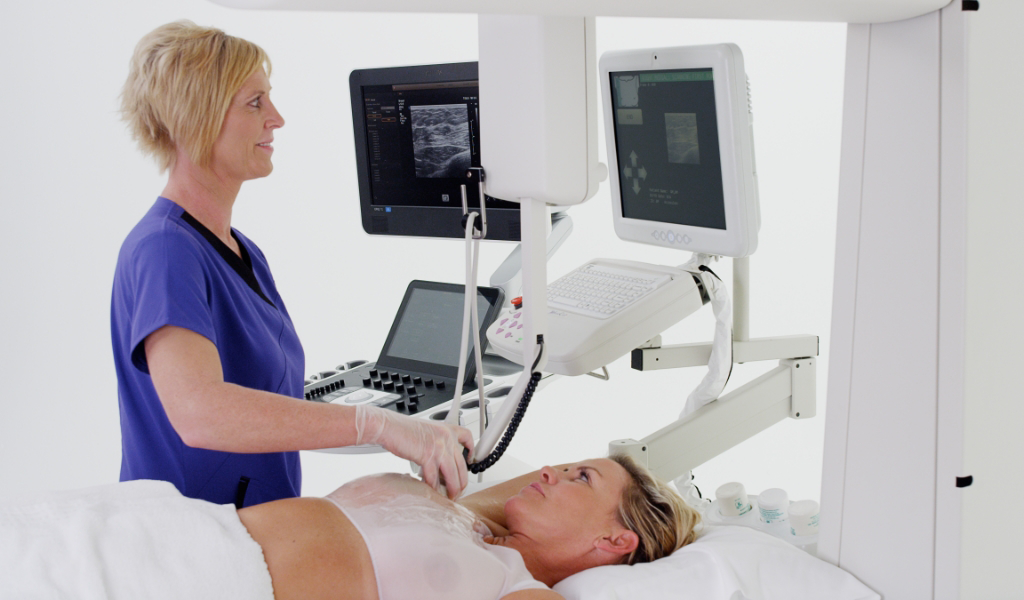
At Sono Center, we offer SonoCine Automated Whole Breast Ultrasound (AWBU), an advanced technology designed to systematically scan the entire breast, including hard‑to‑see areas, using a precise, automated pattern.
Compared with a traditional handheld ultrasound exam, SonoCine AWBU offers several advantages:
Consistent, automated coverage
The system follows a standardized path over the entire breast, reducing blind spots and variability from operator to operator and helping ensure no region is skipped.
Detailed, cine‑loop imaging
SonoCine captures continuous sequences of images that can be reviewed frame‑by‑frame, making it easier to spot small lesions that might be missed on a quick, real‑time look.
Excellent adjunct for dense breasts
For women with dense breast tissue, SonoCine provides an additional layer of screening beyond mammography, helping to reveal cancers that might otherwise remain hidden until they are larger and more advanced.
No radiation, no compression
SonoCine uses sound waves, not X‑rays, and does not require painful compression, making it well suited for more frequent screening when appropriate.
For women who are trying to take control of their breast health, especially those with dense breasts, a family history, or heightened concern about risk, frequent, structured screening using SonoCine can be a powerful complement to the lifestyle changes highlighted at SABCS.
How Sono Center Fits Into Your Breast Health Plan
The SABCS session reminded clinicians and patients that lifestyle and medical care must work together. Reducing alcohol intake, improving weight and metabolic health, and choosing the right screening strategy are all part of one integrated plan.
At Sono Center, our mission is to make high‑quality, automated whole breast ultrasound accessible to women who want to be proactive about their breast health. Here is how we can help:
- We provide SonoCine Automated Whole Breast Ultrasound as an adjunct to your annual mammogram, especially valuable if you have dense breasts or want more thorough screening.
- Our protocols are designed for comfort, consistency, and high‑quality imaging you and your physician can trust.
- We work with you and your care team so that your imaging strategy aligns with your personal risk factors and lifestyle goals.
If you are ready to take the next step in protecting your breast health:
- Visit our website: www.thesonocenter.com
- Request an appointment online
- Or call us at (626) 381-9430 to schedule your SonoCine Automated Whole Breast Ultrasound at a time that works for you
Your choices today, around lifestyle, alcohol, weight, and screening, can shape your breast health for years to come. Pairing the latest scientific insights from meetings like SABCS with advanced screening at Sono Center is a powerful way to invest in yourself.
Schedule your next screening today and stay proactive about your health.